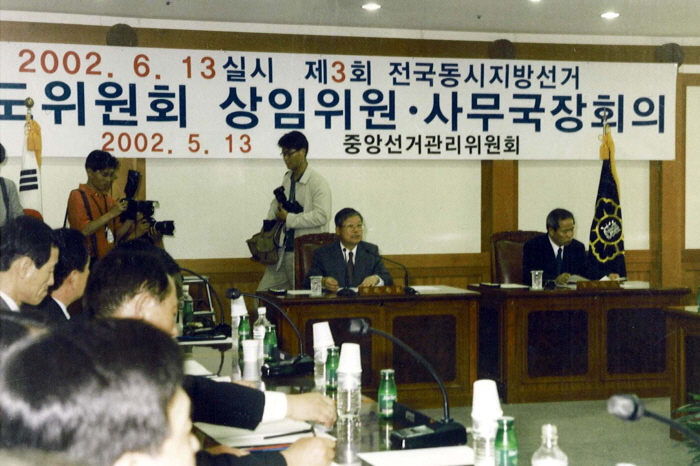
National Election Commission Standing Member of Committee Executive Secretary Joint Conference
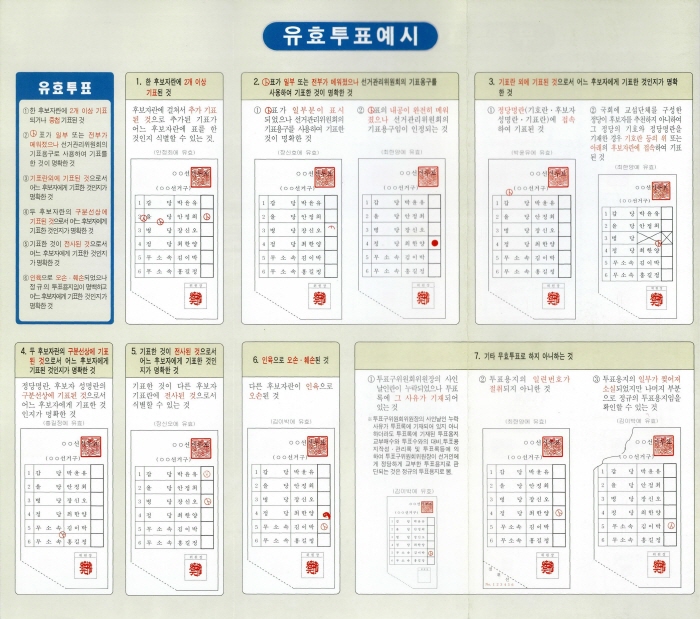
Guideline with Valid or Invalid Vote Examples
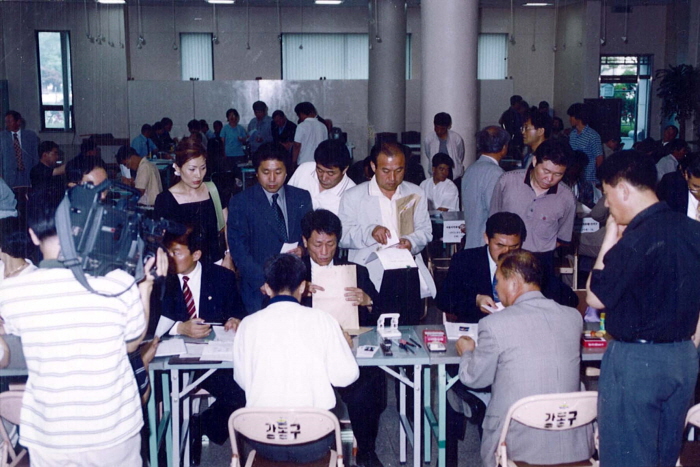
Candidate Registration
Voter Resolution Conference
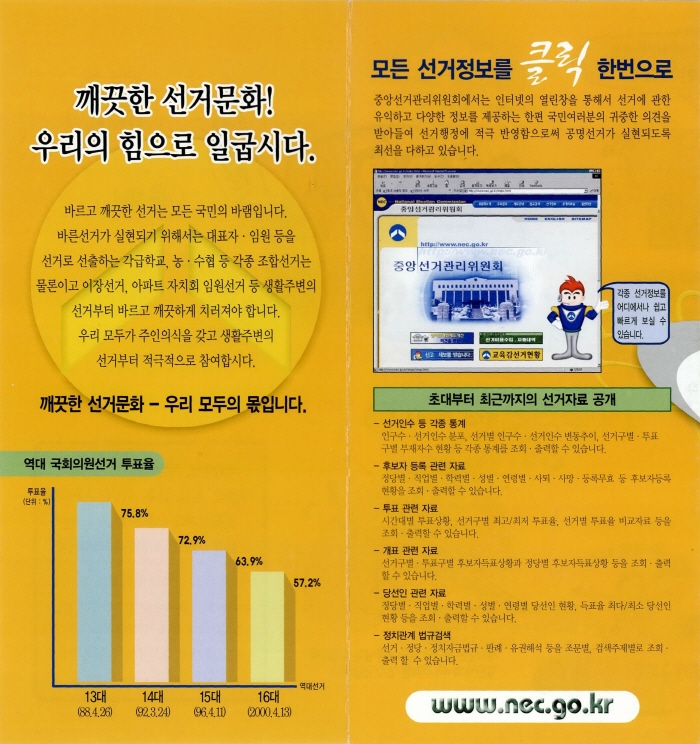
Fair Election Brochure
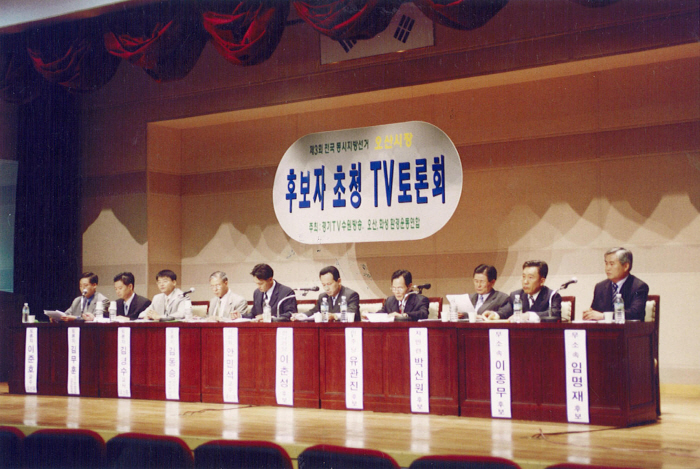
TV Debate with Invited Candidates for the Head of Municipal Government
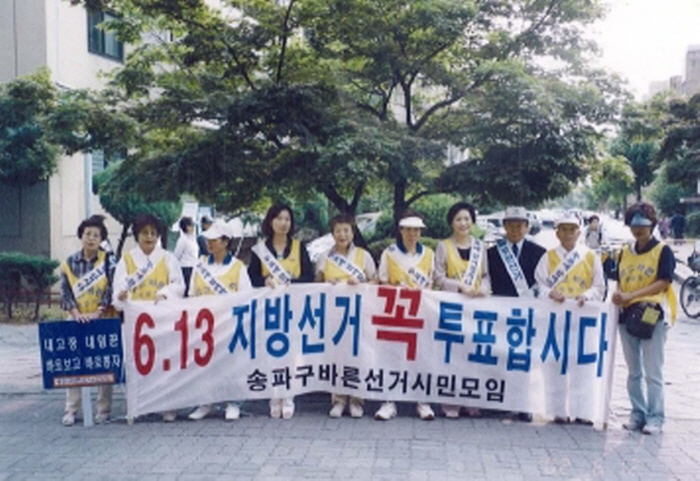
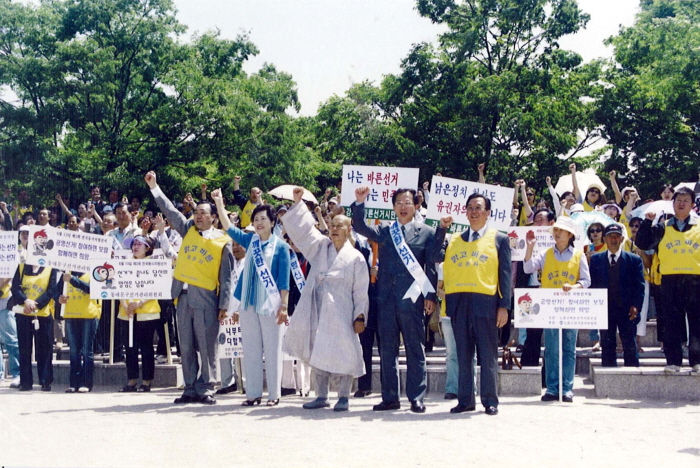
Campaign for Vote Participation by the Fair Election Civil Group
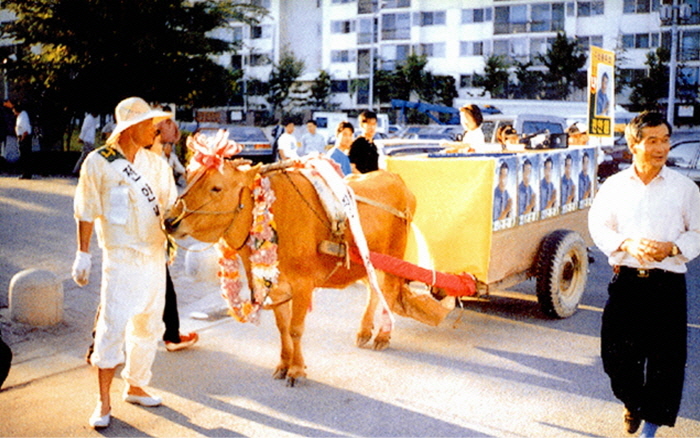
Oxcart Campaign
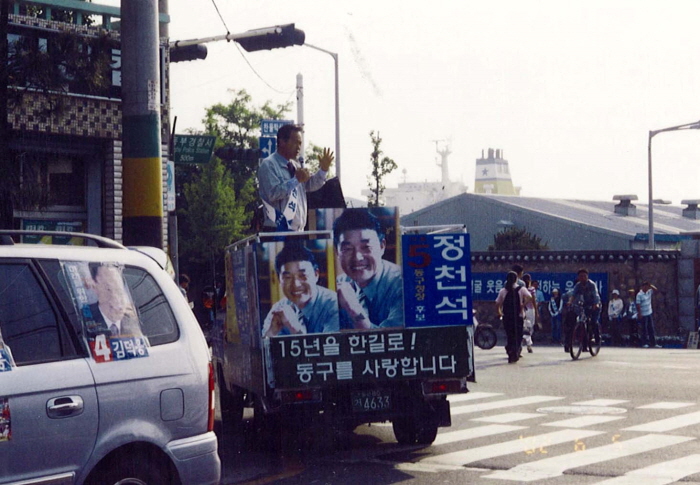
Election Campaign Car Loaded with Loudspeaker on It
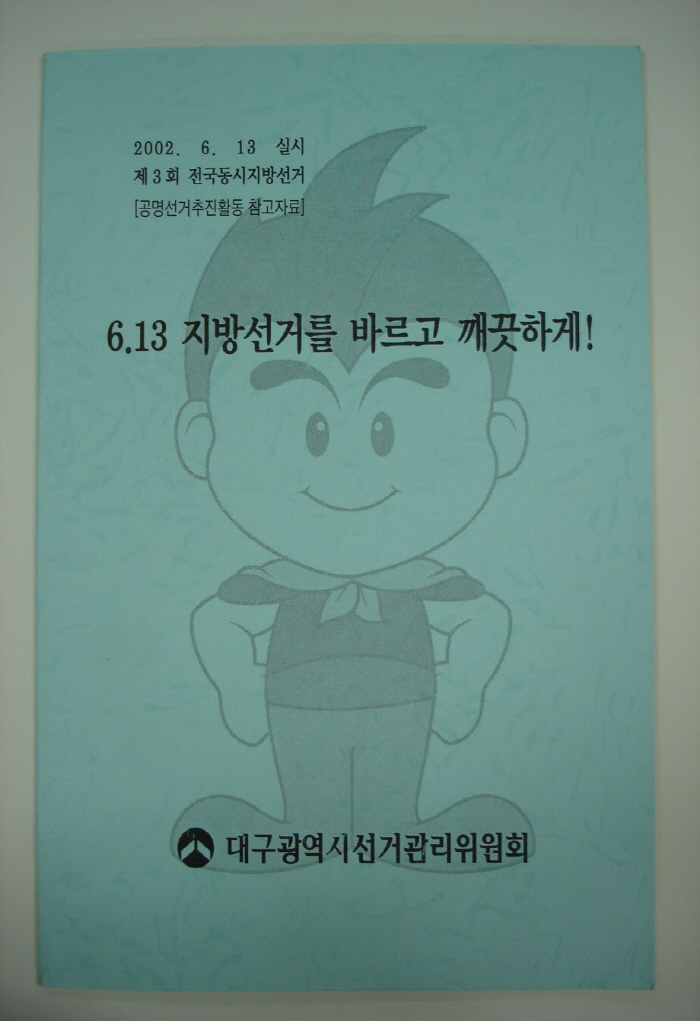
Promotion Campaign
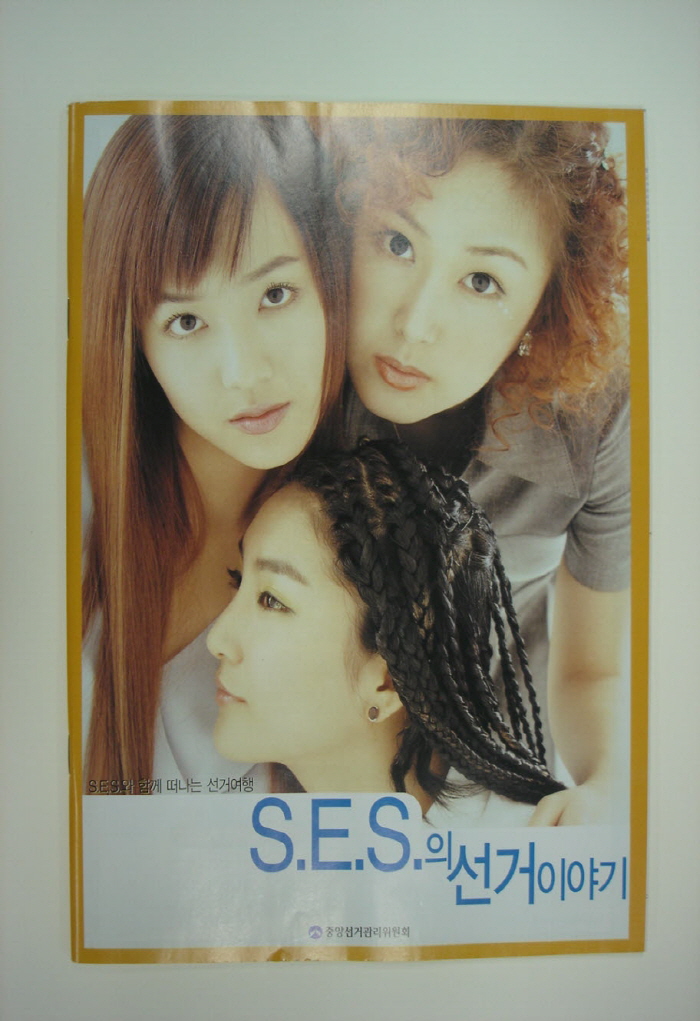
Fair Election PR Material
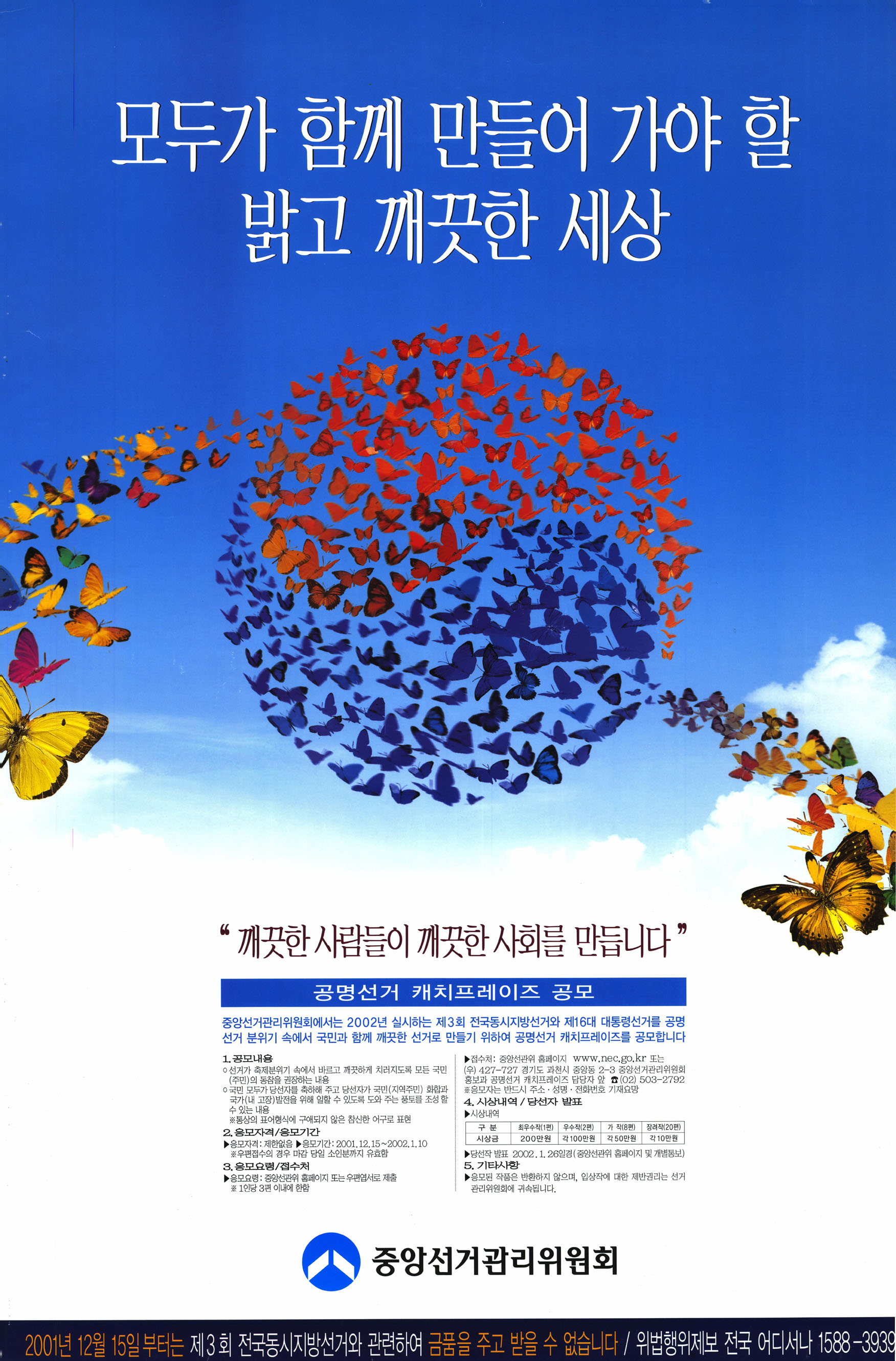
The 3rd Nationwide Simultaneous Local Election Poster I

The 3rd Nationwide Simultaneous Local Election Poster II
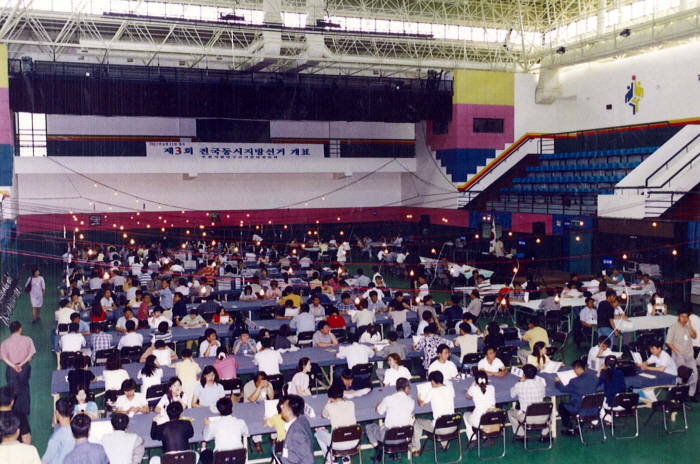
Training for Ballot Counting Staff
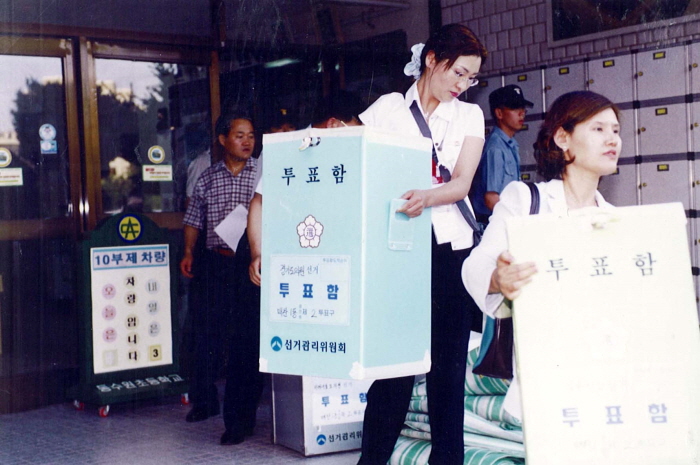
Carrying Ballot Boxes after Voting Close
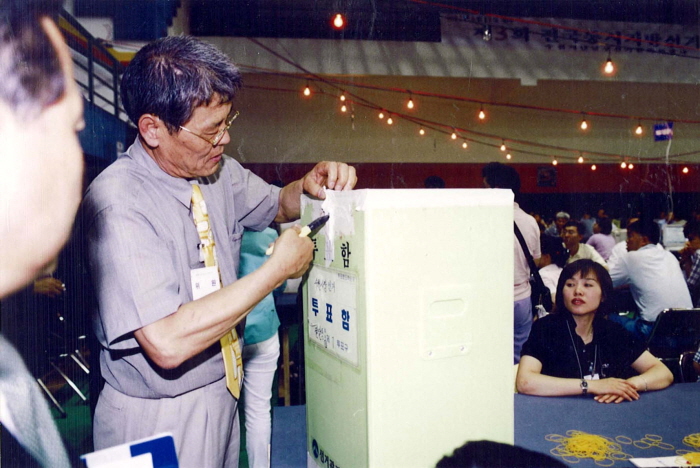
Opening Ballot Boxes


June 13, 2002 (Thu.) The 3rd Simultaneous National Local Elections
The 3rd simultaneous national local elections were held on June 13, 2002 during a politically sensitive period immediately before the 16th presidential election scheduled to take place six months later. The event overlapped with the FIFA World Cup Games hosted by Korea and Japan. While the whole nation was in great excitement for this major sporting event, the political cooperation between the National Congress for New Politics and the United Liberal Democrats did not last until these elections. The subsequent election was the first one after this breakup. In fact, the 3rd local elections were considered to be an overture to the 16th presidential election, a sort of proxy contest for the presidency, as each party had already nominated their candidate. Each party’s leadership, presidential candidate, as well as assemblymen and party members tried to bolster their position in the political arena, fighting over the local assembly seats.
One of the changes in this election was that voters had to cast two votes at a time for the first time in the elections of the council members of gwangyeok city and Provinces: one for the local constituency and the other for the proportional representation candidate. Moreover, nominating women candidates at least 50% of the proportional representation candidates was mandated in the elections of the council members of gwangyeok city and Provinces. Compared to the 2nd election, the funds deposited were reduced to KRW 50 Million for the city mayor and governor elections, KRW 10 million for the district·city·county mayor elections, KRW 3 million for the city councilor and provincial assemblyman elections and KRW 2 million for the district·city·county councilor elections.
During the election period, the people’s participation increased and major political parties started applying the bottom-up nomination system, under which a party nominee was designated through the public participation, despite multiple adverse effects. Part of civil groups led a campaign in which people recommend a prominent candidate and make him elected. The Internet was added as a new tool for the campaign in addition to traditional means such as print materials, speech sessions, newspapers, TV broadcast and ads.
The turnout rate was 48.9% hitting a record low in the history of nationwide election. Particularly, those in their 20s showed a low rate of participation at less than 30%. The opposition Grand National Party held a dominant position across the board. It won 11 (68.8%) out of 16 in the elections of the heads of gwangyeok city and Provinces, 140 (60.3%) out of 232 in municipal government head elections, 431 (70.8%) out of 609 in the elections of local constituency of the council members of gwangyeok city and Provinces , and 36 (49.3%) out of 73 seats in the proportional representation elections of the council members of gwangyeok city and Provinces . On the other hand, the ruling Millennium Democratic Party only took 4 in the elections of the heads of gwangyeok city and Provinces, 44 in the municipal government head elections, 121 in the elections of local constituency of the council members of gwangyeok city and Provinces and 22 in the proportional representation elections of the council members of gwangyeok city and Provinces. The United Liberal Democrats barely won 17 gwangyeok city and Province heads and 33 council members of gwangyeok city and Provinces.


