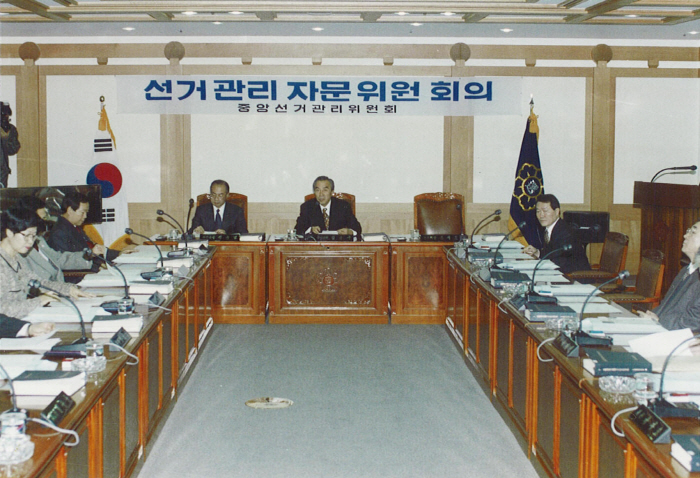
Advisory Committee for Electoral Management
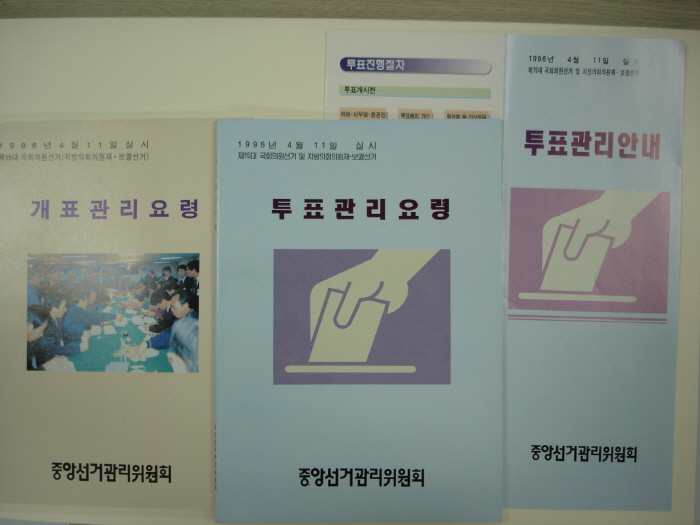
Booklet on Electoral Administration
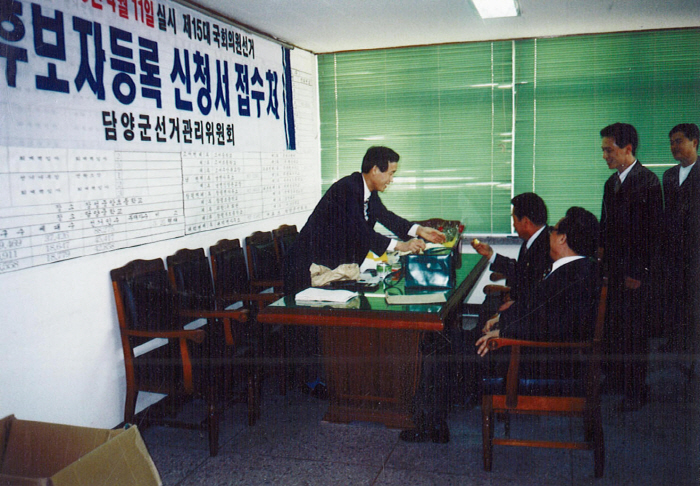
Candidate Registration
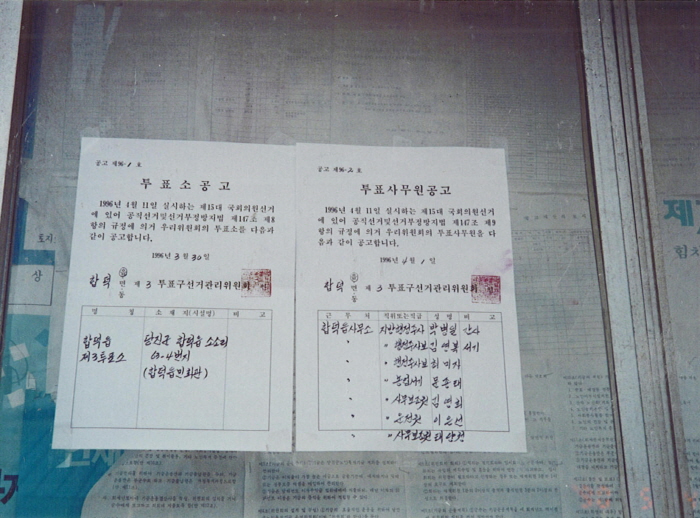
Notice on Polling Station and Staff
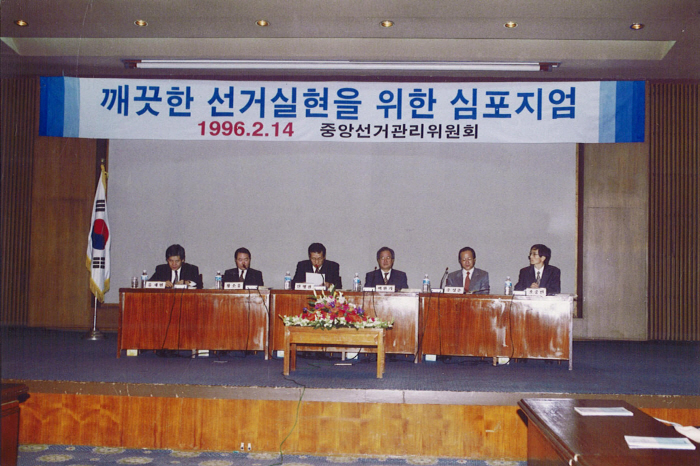
Symposium for Realizing Clean Elections
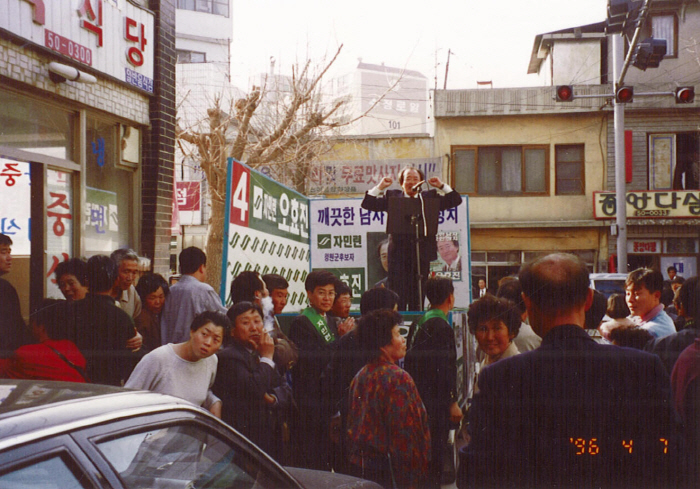
Speech and Discussion in Public Space
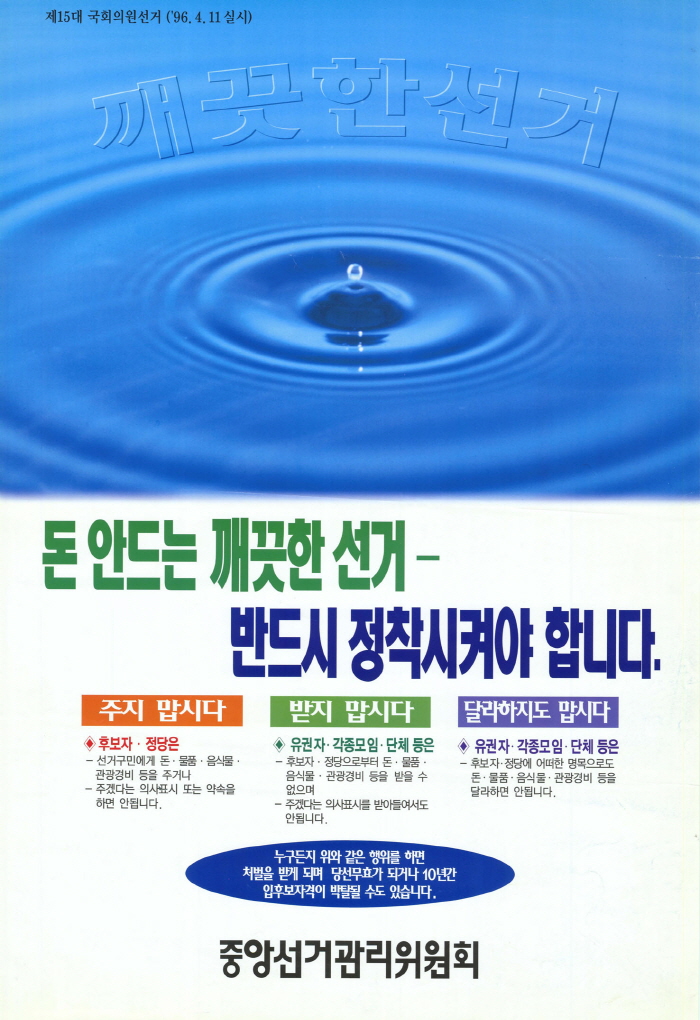
The 15th National Assembly Election, Poster 1
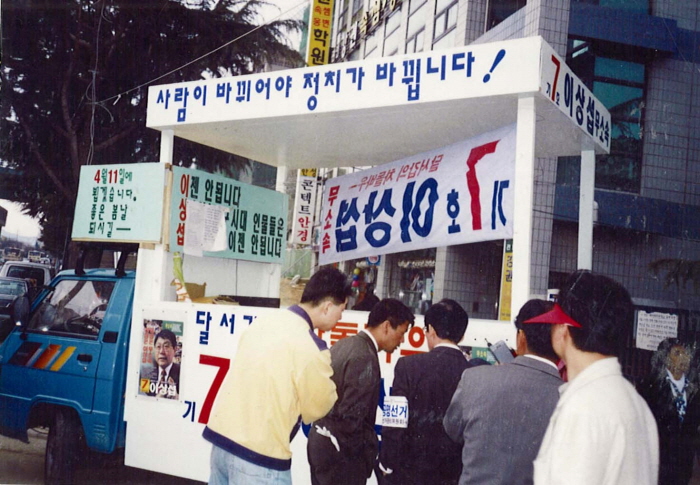
Scene of Crackdown on Illegal Campaign Via Vehicle
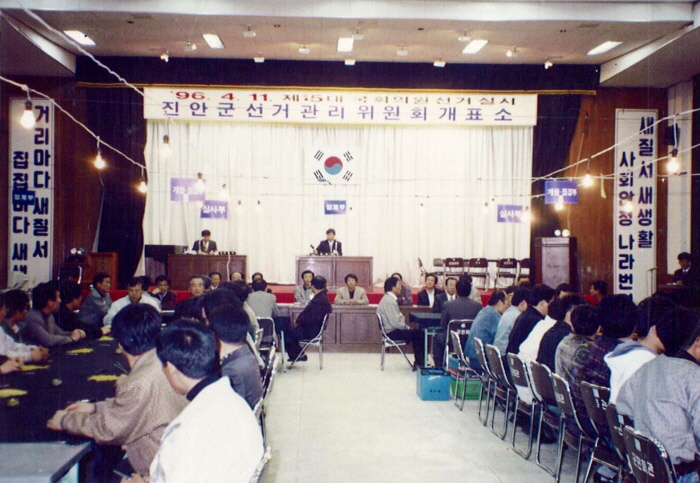
Education for Ballot Counting Manager
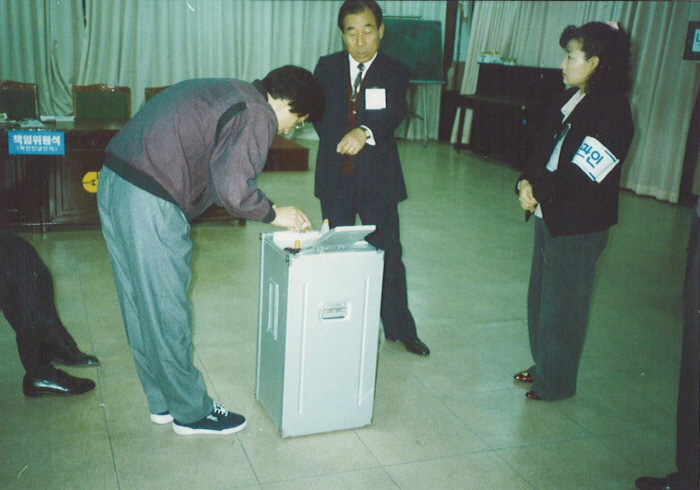
Sealing after Closing the Ballot Box
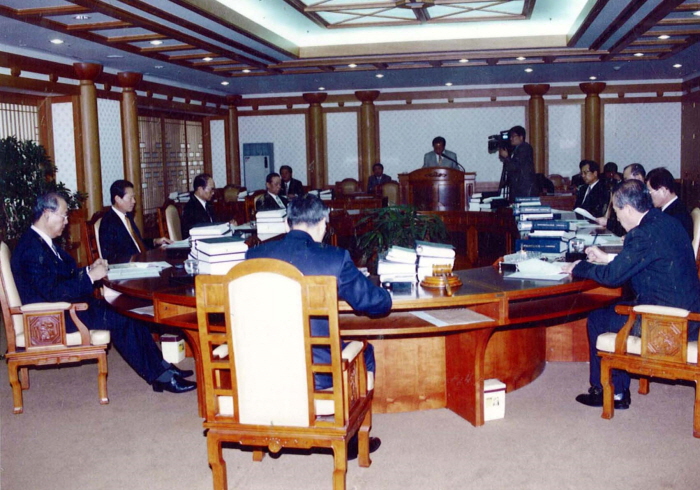
Winner Confirmation Committee Meeting
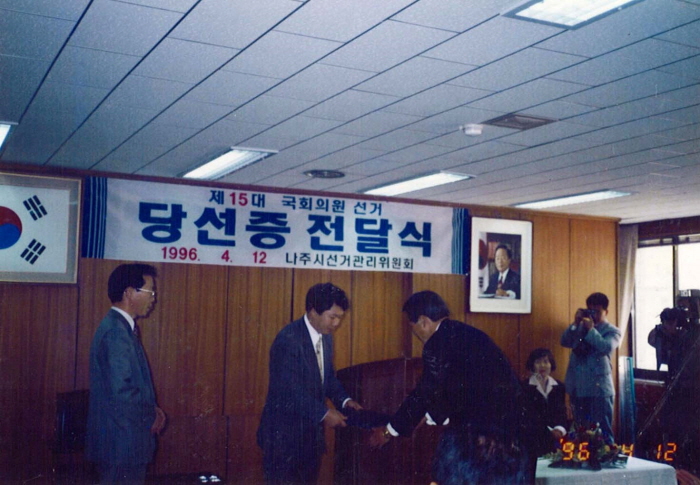
Presenting Certificate for the Elected


Thursday, April 11, 1996 The 15th National Assembly Elections
The 15th Election of the National Assembly members was held on April 11, 1996 at the end of the term of the 14th National Assemblymen. The election served as a run up to the 15th Presidential Election, which was scheduled in about twenty months. Particularly, it served as an opportunity to predict the course of the presidential election to come as Kim Dae-jung, former President of the Peace Democratic Party, who had declared would retire from politics following the 14th Presidential Election, officially announced his political return by founding the National Congress for New Politics, ahead of the 15th National Assembly Election.
From its earlier stages, it was a contest of two or three parties depending on the region among the Democratic Liberal Party which changed its name to New Korea Party, the National Congress for New Politics, the United Democratic Party, and the United Liberal Democrats. The New Korea Party advocated the stability theory, arguing that the ruling party had to take the majority of seats for successful generation replacement and political stability. The National Congress for New Politics confronted the ruling party with the “Theory of Checks,” contending that it should secure a third of the seats to block the ruling party’s attempt to revise the Constitution and prevent the ruling party’s monopoly. The opposition United Democratic Party proposed replacing the three Kims’ old politics with new reform-minded politics and the United Liberal Democrats pledged to uphold conservative values.
As a result of the election, the opposition parties won the majority of seats. The New Korea Party held a majority in the house, winning 139 seats, or 46.5%, with 34.5% of the vote share but failed to take the majority of seats. The National Congress for New Politics took 79 seats becoming the leading opposition party, while the United Liberal Democrats ranked third by winning 50 seats. The United Democratic Party won only 15 seats, failing to form a parliamentary negotiating body.


