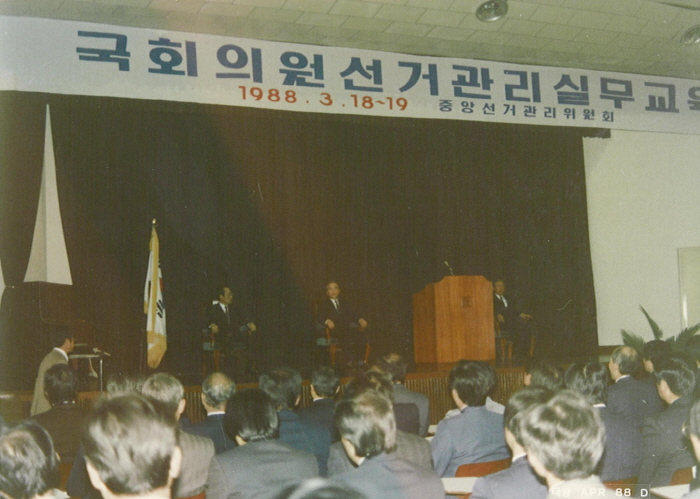
On-the-Job Training for the National Assembly Election Management
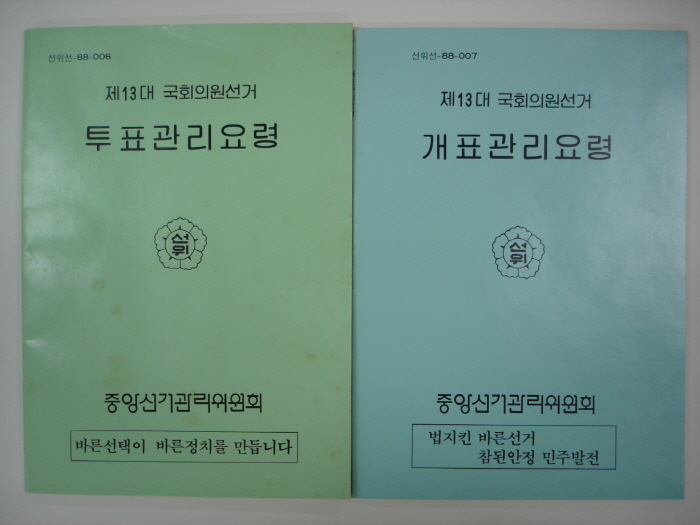
Booklet on Electoral Administration
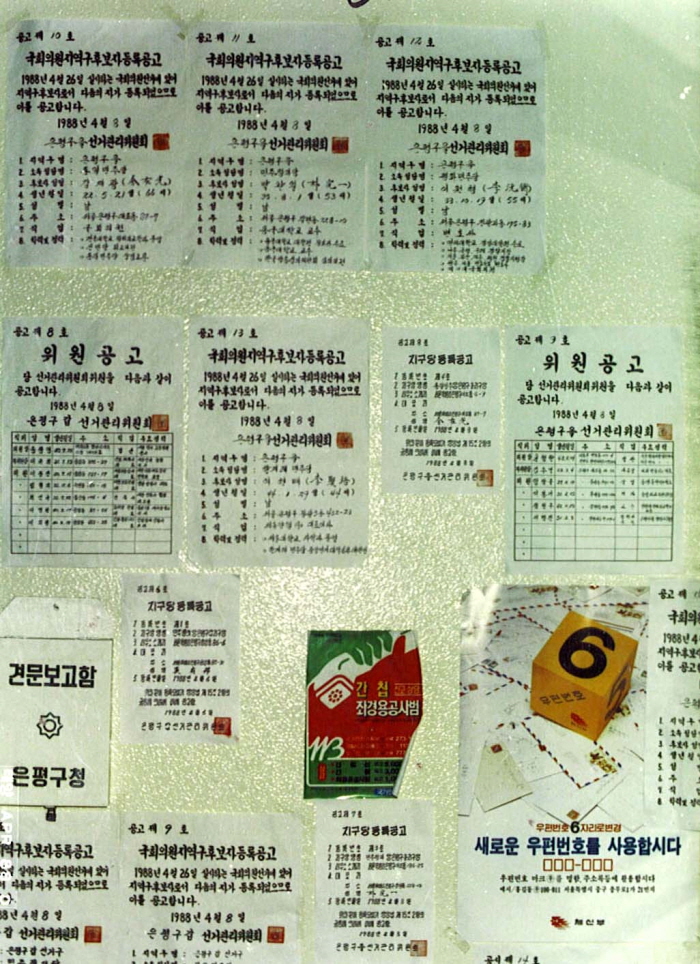
Posting Notices
Candidate Registration for the National Constituency
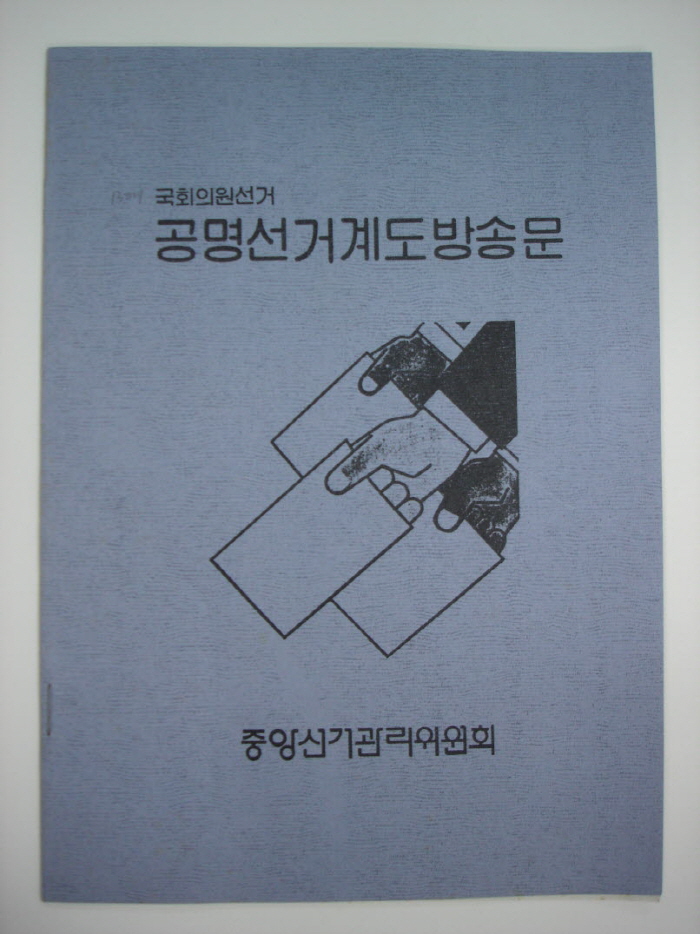
Broadcast Script Encouraging Fair Elections
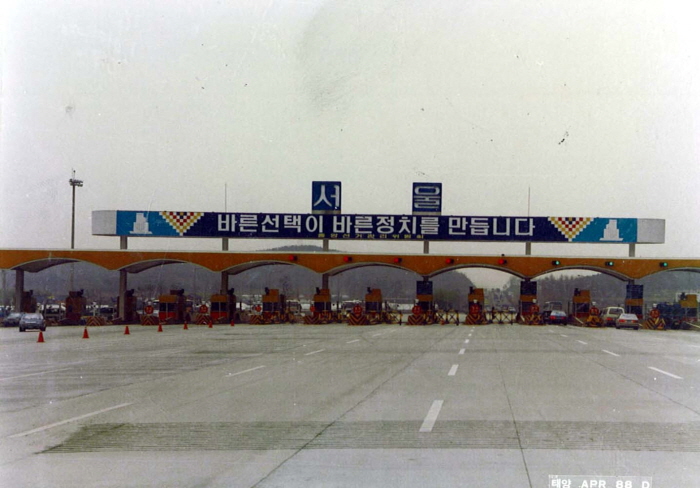
Seoul Tollgate with Guidance Signboard
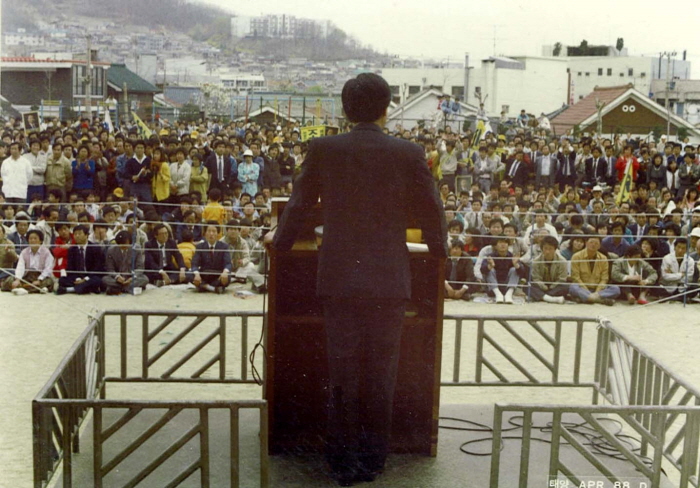
Candidate Speech
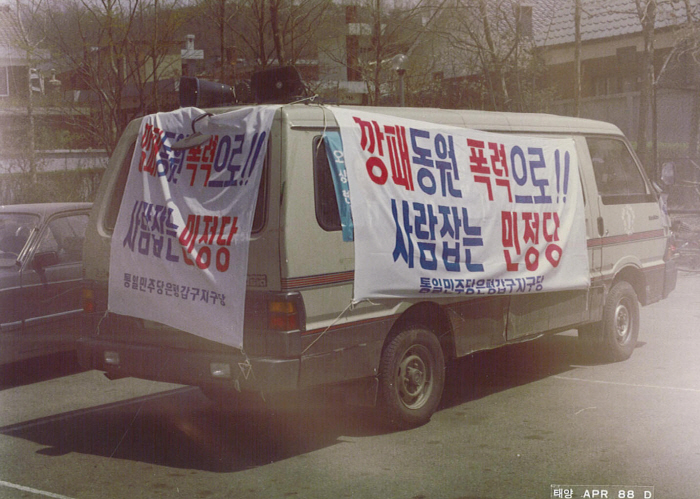
Vehicle for Campaign Broadcasting
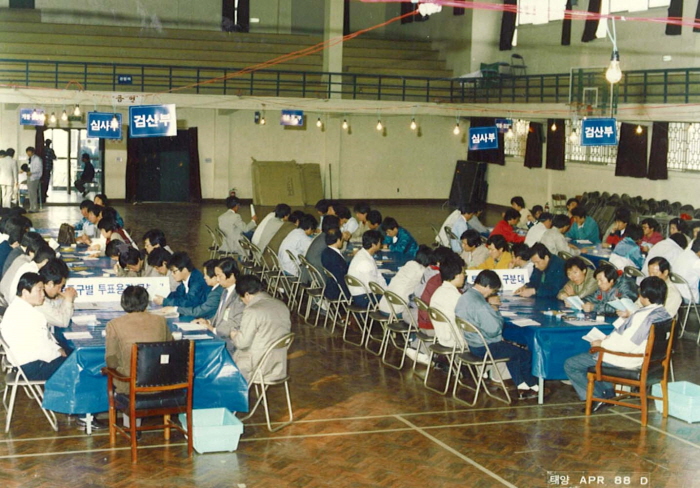
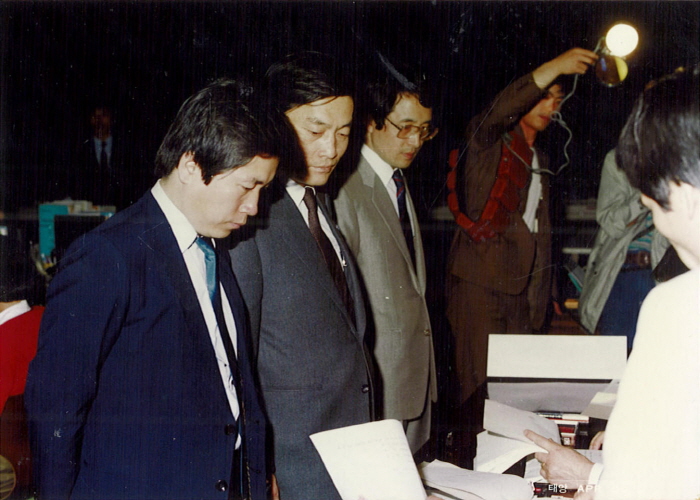
Training for Ballot Counting Staff
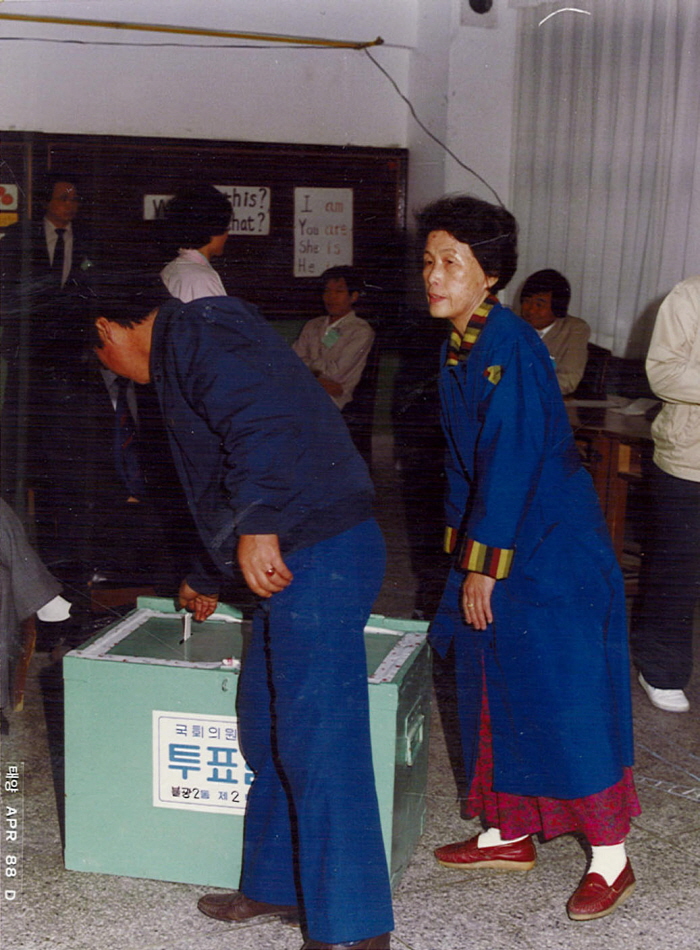
Inserting Ballots into Ballot Boxes
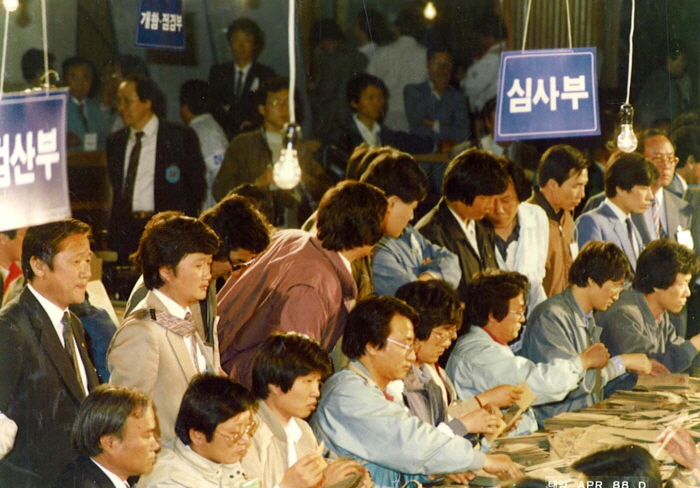
Ballot Counting by Staff
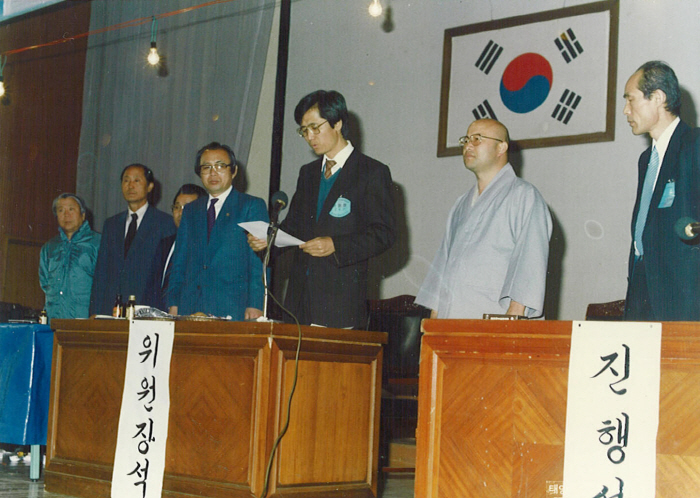
Announcement of the Elected


Tuesday, April 26, 1988 The 13th National Assembly Elections
The 13th Election of the National Assembly members was held on April 26, 1988, one year before the 12th National Assembly’s term (from April 11, 1985 to April 10, 1989) expired, in accordance with the Constitution of the 6th Republic of Korea which was promulgated on October 29, 1987. The 13th Election of the National Assembly members took place only four months following the 13th Presidential Election on December 16, 1987.
The newly elected President Roh Tae-woo had been leading the Democratic Justice Party’s campaign as the party’s president. President Roh competed with the three defeated presidential candidates, namely Kim Young-sam, Kim Dae-jung and Kim Jong-pil. As party leaders, they themselves ran for the election in the local and national constituency. The ‘1 Roh and three Kims’ contested once again following the 13th Presidential Election.
From its earlier stages, four political parties with different regional support bases contested: the Democratic Justice Party, the Democratic Unionist Party, the Peace Democratic Party and the New Democratic Republican Party. The newly launched Roh administration wanted the majority of seats in the National Assembly to ensure stable management of government. Meanwhile, both Kims (Kim Young-sam and Kim Dae-jung) were competing with each other to be the leading opposition party. Against this backdrop, the election was more heated than ever before.
Moreover, competition among candidates had become fiercer as the medium constituency system, criticized as a way to share the pie between the ruling and opposition parties, was abolished and the single member constituency system, under which one winner is elected per single constituency, revived in 17 years. The Democratic Justice Party won 125 seats or 41.8% of the total seats, becoming the ruling party. As the ruling party failed to win the majority of seats, however, the opposition took majority control for the first time in National Assembly history. The Peace Democratic Party won 70 seats, becoming the number one opposition party and the Democratic Unionist Party held 59 seats. The New Democratic Republican Party was able to form a parliamentary negotiating body by winning 35 seats.


