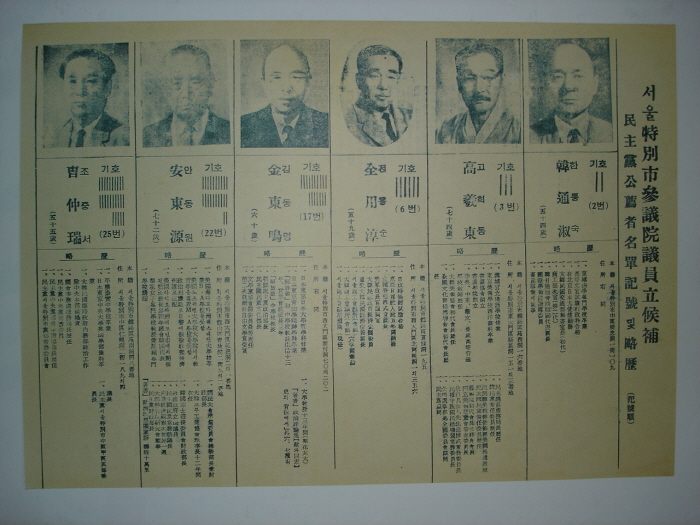
List of Candidates Nominated by the Populist Party for Seoul City for the Upper House Election
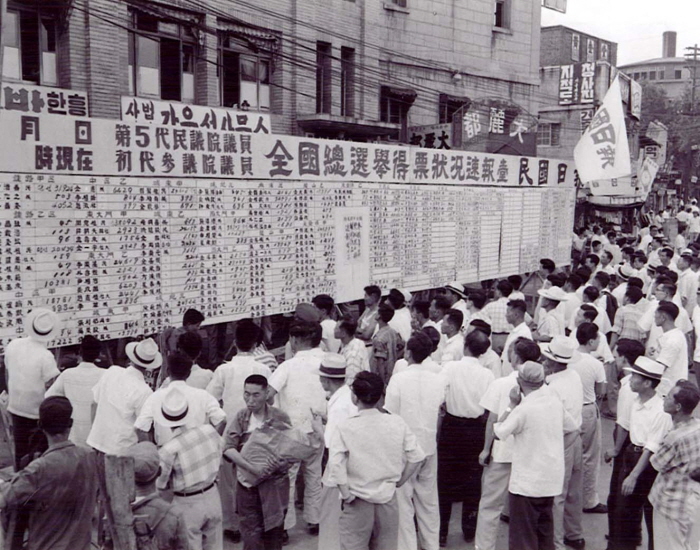
Ballot Counting for the 5th Election of the National Assembly Members
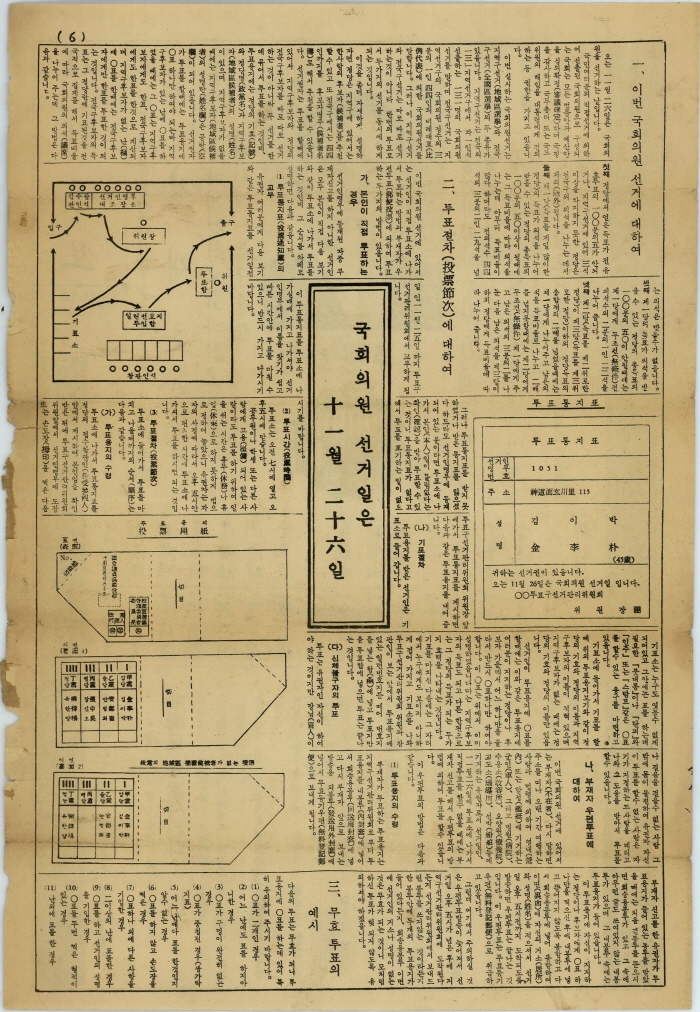
Voting Guidelines
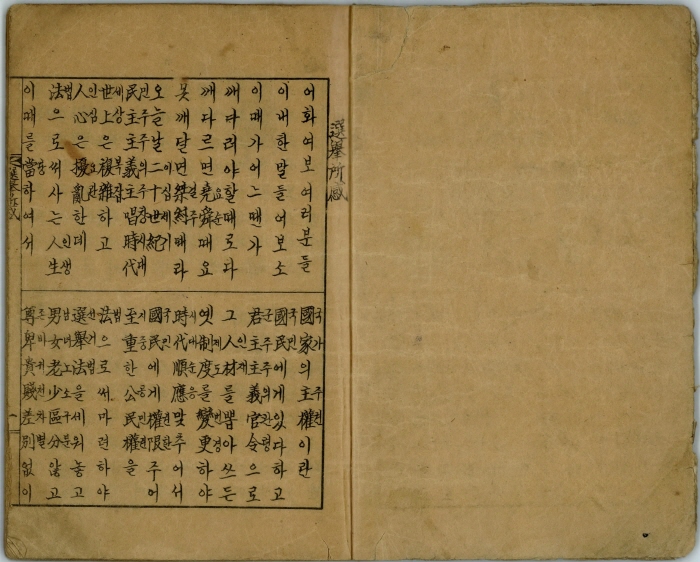
Expression of Thanks by the Elected
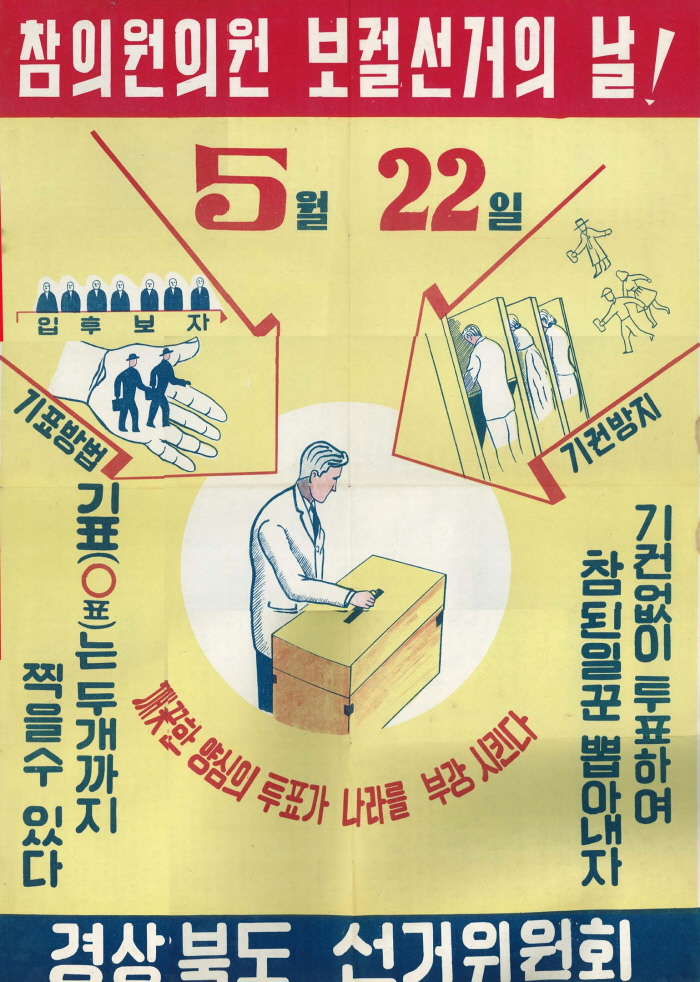
Upper House By-election Campaign Poster
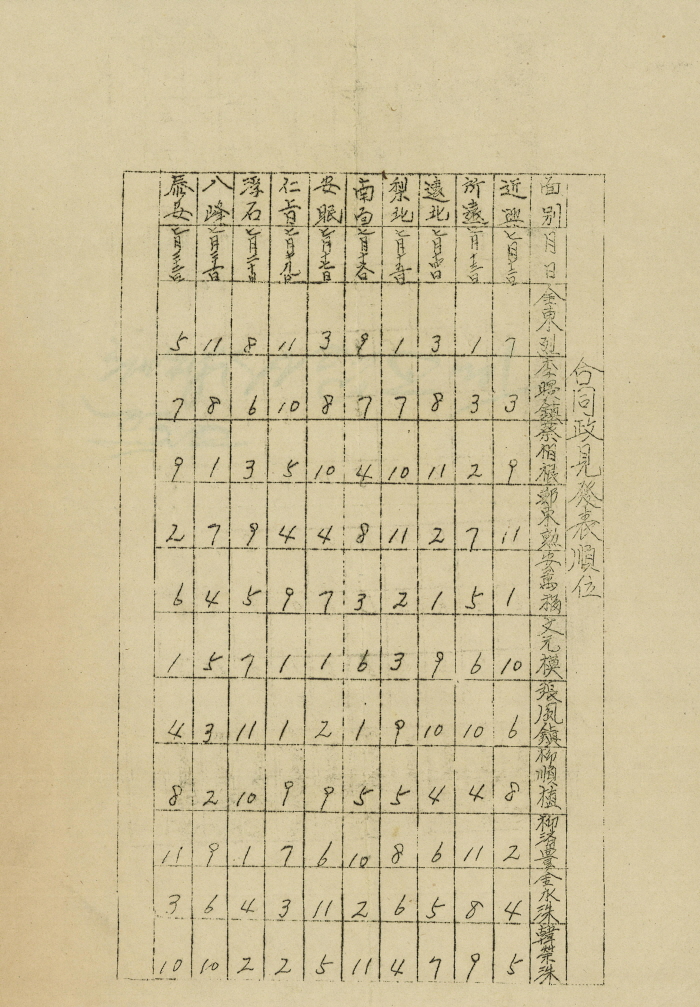
List of Speech Order at the Joint Campaign Meeting
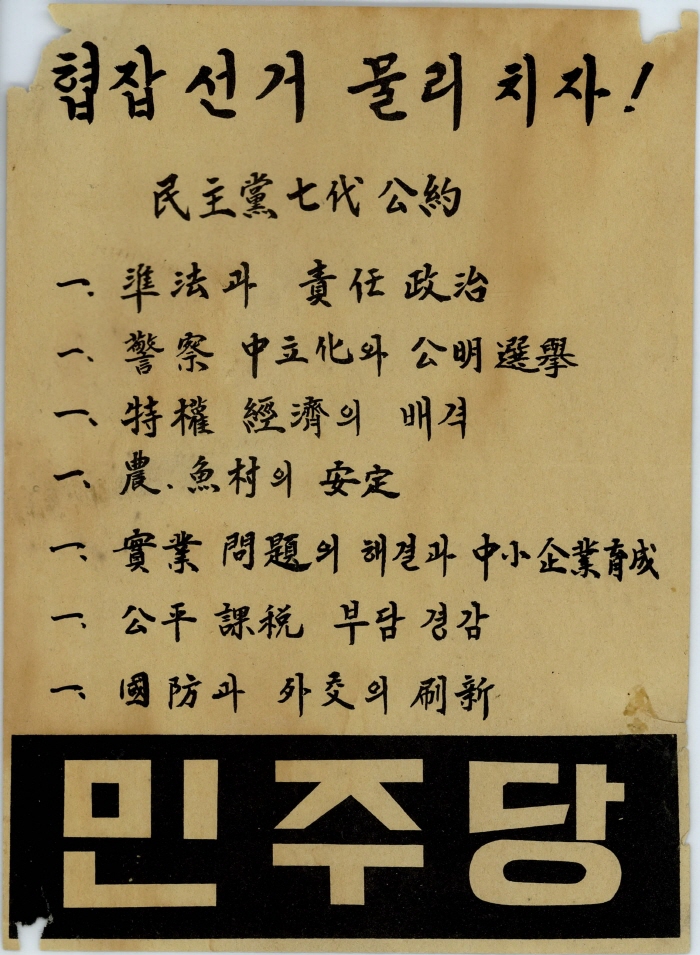
7 pledges leaflet of promotional material of Democratic Party
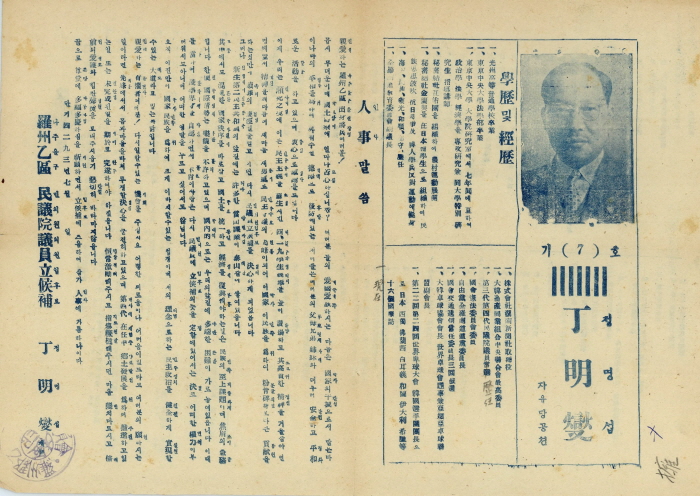
Campaign Material by Jung, Myung-sub’s Camp
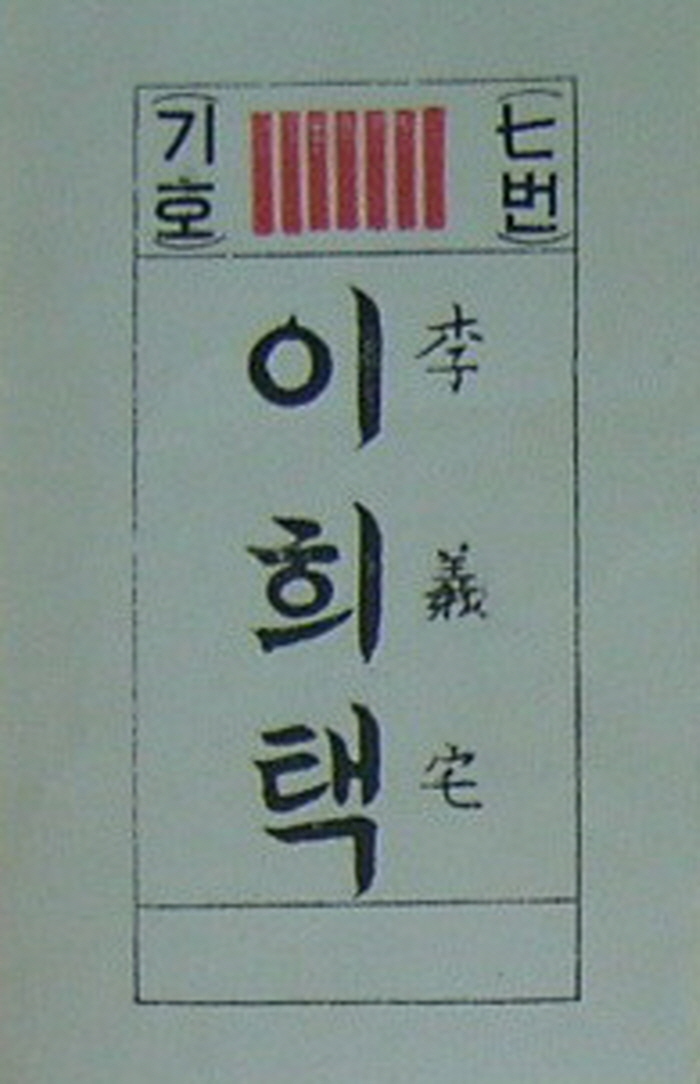
Lee, Hee-taek’s Business Card Type Handout
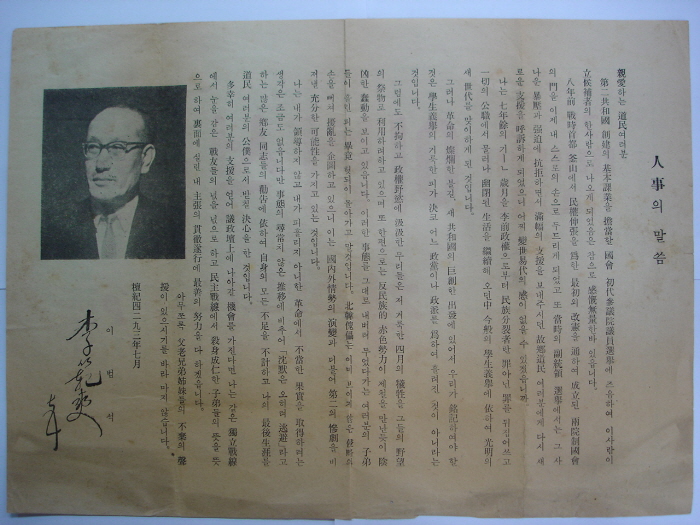
Campaign Material by Lee, Bum-seok’s Camp (Front)
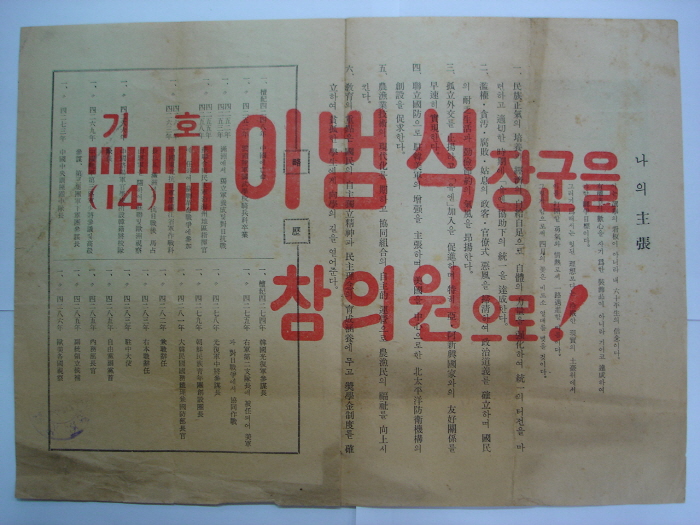
Campaign Material by Lee, Bum-seok’s Camp (Back)
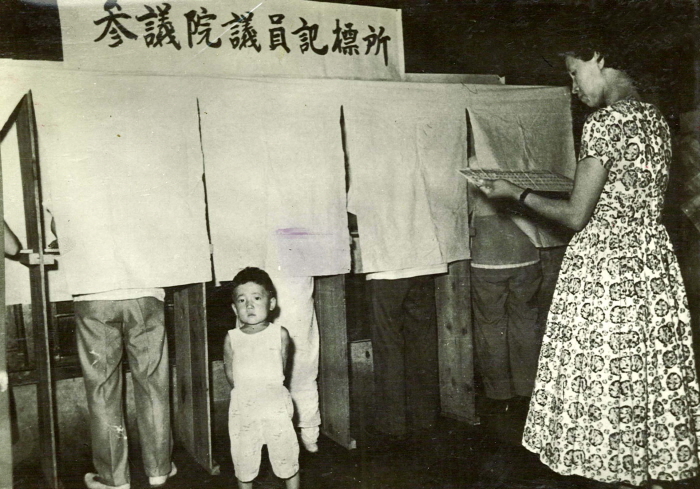
Upper House Election Polling Booth
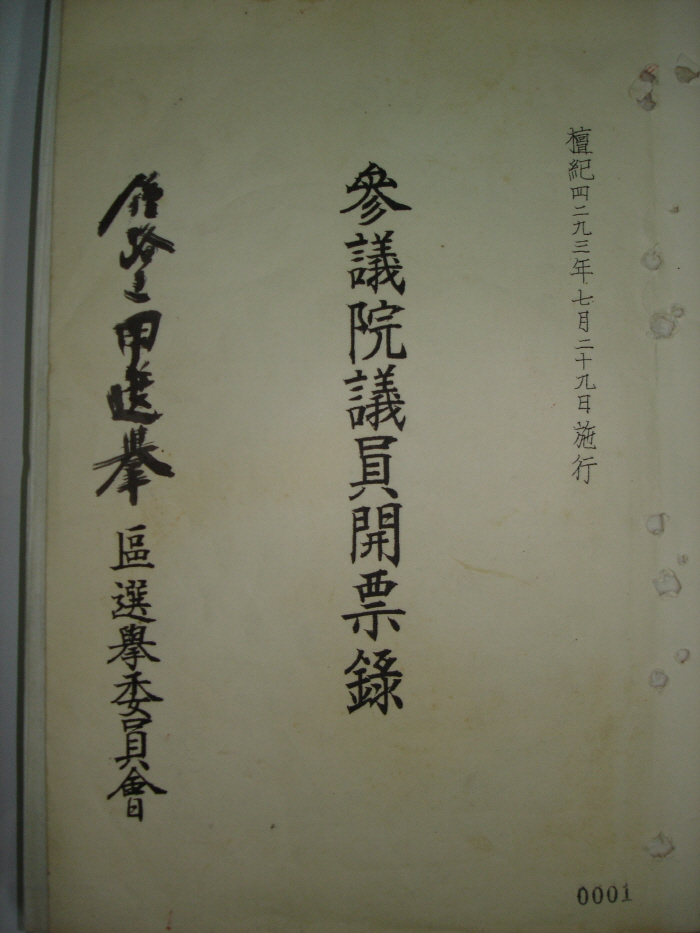
Upper House Election Ballot Counting Protocol
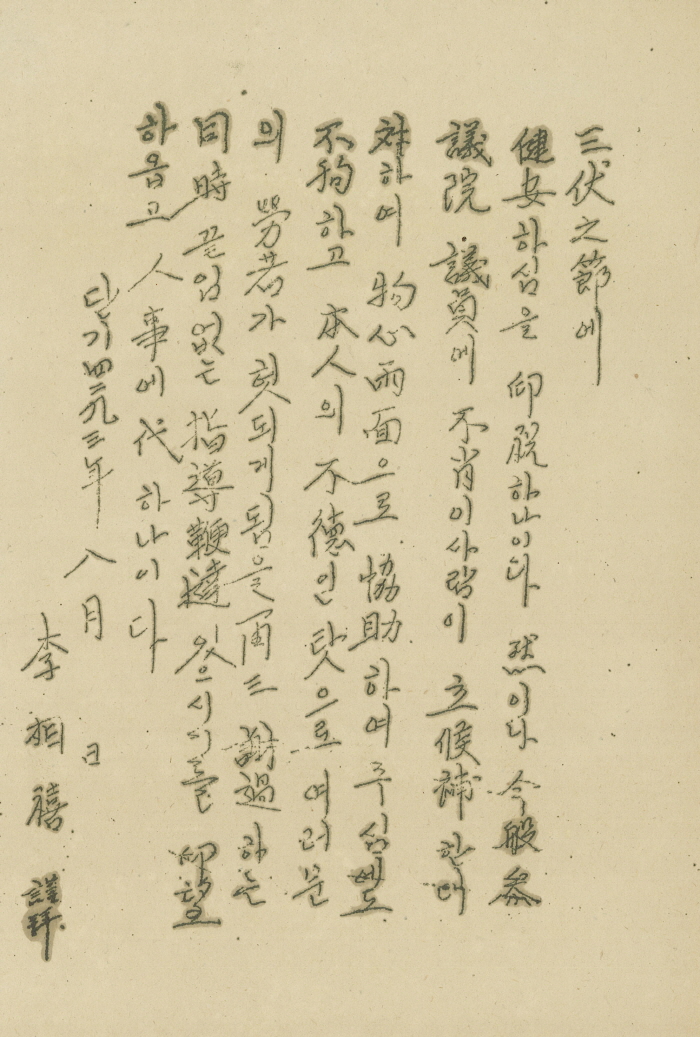
Letter of Appreciation by Unsuccessful Candidate Lee, Sang-ui


July 29, 1960 (Fri.) The 5th National Assembly Elections
The 1st Republic of Korea collapsed in 1960 after the “March 15 Rigged Election” followed by the “April Revolution.” On June 15, 1960, the parliamentary system was newly introduced according to the 3rd Constitutional amendment. On June 23, as the Election of National Assembly Members Act was established in order to construct a bicameral system, the previously founded “National Assembly Members Act” for the Upper and Lower Houses was nullified. Under such circumstances, the 1st election of the National Assembly members of the 2nd Republic of Korea based on the bicameral system was held on July 29, 1960 for the first time in the parliamentary politics of the ROK. This was the first-ever public election since the launch of the National Election Commission as a constitutional body under the 3rd Constitutional amendment.
The endorsement system by voters, which had been considered as an obstacle to the candidate registration, was abolished. In order to enhance transparency in the voting process, the number of observers also increased to four per candidate and the observers were given the right to take pictures in case of an accident in a polling station. Airing candidates’ career resume on public broadcast was first introduced as a campaigning method.
In the Lower House election where 233 members were picked, the Democratic Party accounted for 75.1% or 175 seats, holding a majority of the House. The next largest group was non-partisan lawmakers who took 49 seats., 5 political parties and groups only had one to four candidates elected. But in terms of vote share, independent lawmakers accounted for 46.8% of valid votes, while the Democratic Party earned 41.7%. Comparing the number of winners to the seat occupancy, the seat share of the Democratic Party was higher than its vote share by 33.4%.
In the first held Upper House election, 201 candidates competed for 58 seats. The Democratic Party, Liberal Party, Social Mass Party, Socialist Party, and Korean Resistance Party in addition to some groups and non-partisan individuals participated in the election.
As a result, the Democratic Party held the largest number of seats (31). The second largest number of seats (20) was taken by non-partisan candidates. The Liberal Party won only 4 seats, while the Social Mass Party, Socialist Party and other groups won 1 seat respectively. But in terms of the vote share, just the same as the Lower House election, independent candidates accounted for the largest portion, 49.3%, while the Democratic Party obtained 39.0% of the seats. The seat share of the Democratic Party was 14.4% higher than its vote share.


